

![]()
2018
Established in(Year)
![]()
7000+
Area(Square Meter)
![]()
1000+
Specifications(Piece)
![]()
1000+
Valve Size(mm)


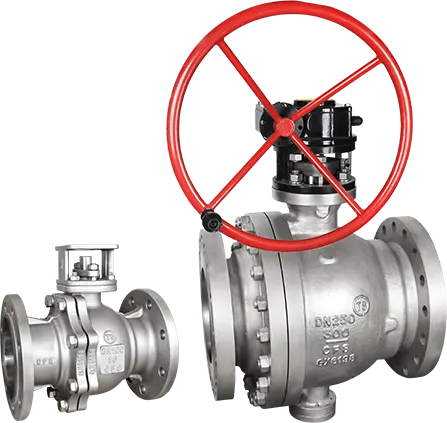
How are ball valves and check valves used in conjunction in a piping system?
Ball valves and check valves are the perfect match in terms of "operational flexibility" and "operational safety" in a piping system. They are usually not present independently but work together in accordance with the principle of complementary functions, forming a complete set of fluid control and protection solutions. The most common coupling configuration is usually found on the outlet pipelines of pumps (such as water pumps and booster
09-30
How to choose between soft-sealed and hard-sealed butterfly valves?
Strong corrosive/organic solvents: Some organic solvents can cause the rubber to swell and lose its effectiveness. In such cases, hard-sealed valves made of corrosion-resistant metals (such as stainless steel, Hastelloy) need to be used. High-temperature steam: This is the domain of hard seals. Soft seals will rapidly carbonize under high-temperature steam.
09-30
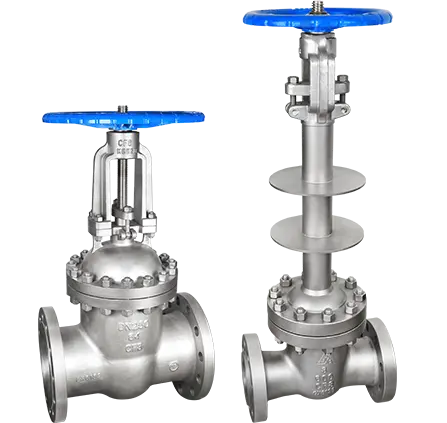
The construction of the gate valve was originally so precise.
Its core function is to achieve "full opening and full closing" of the medium. When the gate plate is completely separated from the valve seat, the medium can pass through without any obstruction; when the gate plate is tightly in contact with the valve seat, a reliable seal can be formed, blocking the flow of the medium. This characteristic of "fully open when open, fully closed when closed" makes it the preferred choice in working conditions where the medium needs to be completely cut off.
09-30
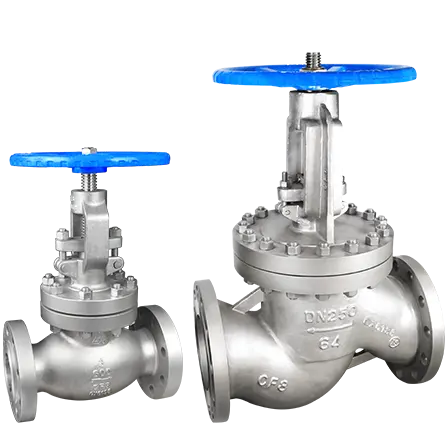
Which operating conditions require the use of a stop valve?
This is the "home ground" of the stop valve. When the medium temperature exceeds 200℃ or the pressure is high, the sealing performance and structural strength of the stop valve are much better than those of ordinary valves. Typical scenarios: Main steam pipelines of thermal power plants, boiler feedwater systems, and high-temperature reaction pipelines in petrochemical plants. Why is it necessary to use it?
09-30
How can the problem of the sealing surface of the gate valve being easily scratched be solved?
When closing the valve, do not use an extension rod to apply excessive torque. Excessive closing force will crush the microstructure of the sealing surface, causing deformation or cracks in the sealing surface. Maintain the cleanliness of the medium: Install a filter upstream of the valve to prevent welding slag, rust, sand, and other hard impurities in the pipeline from entering the valve chamber. These impurities are the "killers" that can damage the sealing surface.
09-30
How can one determine if a gate valve has experienced internal leakage?
High-temperature interference: If the downstream connection of the valve is a pressurized steam drainage main, or there are other high-temperature steam sources nearby, even if the valve is tight, the temperature may still exceed 70℃. At this time, the temperature of the upstream pipe wall or the valve stem should be measured for comparison. If the downstream temperature is significantly higher than the upstream temperature, it can be confirmed that there is an internal leak.
09-30