

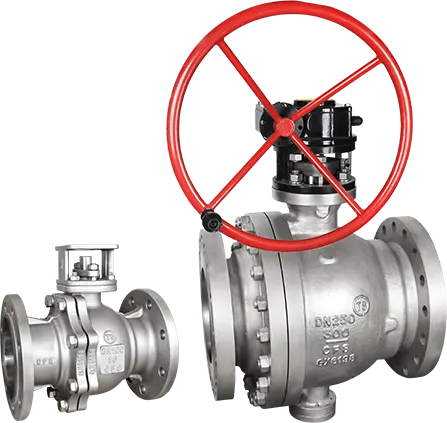
Ball valve series
Overview:
A ball valve is a type of valve that controls the flow of fluid by rotating the valve core (a ball). Its core structure consists of a ball with a circular hole. The ball rotates around an axis perpendicular to the pipeline axis to achieve full opening (with the hole aligned with the pipeline), full closing (with the ball blocking the pipeline), or flow regulation (partial opening). Ball valves have the characteristics of simple structure, reliable sealing, and low flow resistance. They are widely used in industrial fields such as petroleum, chemical engineering, natural gas, water treatment, and civil pipeline systems.
Nominal diameter: 10mm to 1000mm and 1/2" to 60"
Nominal pressure: 1.0 MPa to 16.0 MPa / 150 Lb to 1500 Lb / 10 K to 160 K
Working temperature: -196℃ to 700℃
Adopting standards: GB, DIN, API, ANSI, JIS, BS, etc.
Body material: carbon steel, stainless steel, alloy steel, ultra low carbon stainless steel, titanium alloy, high nickel alloy and Monel alloy, etc
Drive methods: Manual, worm gear transmission, bevel gear, electric, pneumatic, hydraulic, etc.